


Welcome to The Intentional Life, an interview series featuring people who have built lives, careers, and businesses on their own terms. Some are entrepreneurs. Some are creatives, writers, travellers, builders, or leaders. What they have in common is a willingness to question the conventional path and make choices aligned with what matters most to them. My hope is that these conversations help you think differently about your own path and remind you that there is no single blueprint for a meaningful life.
Some people spend their lives trying to outrun the hardest chapters of their story. Teresa Fracasso chose to learn from hers. After growing up between countries and navigating childhood trauma, she spent years rebuilding not just her life, but her relationship with herself. Today, she’s an executive coach, writer, and movement educator who helps ambitious people move beyond burnout, reconnect with what they actually want, and build lives rooted in clarity rather than survival.
In this conversation, Teresa shares why resilience isn’t about enduring more, how movement became her first language of healing, and why the strongest lives are often built after everything you thought would define you.
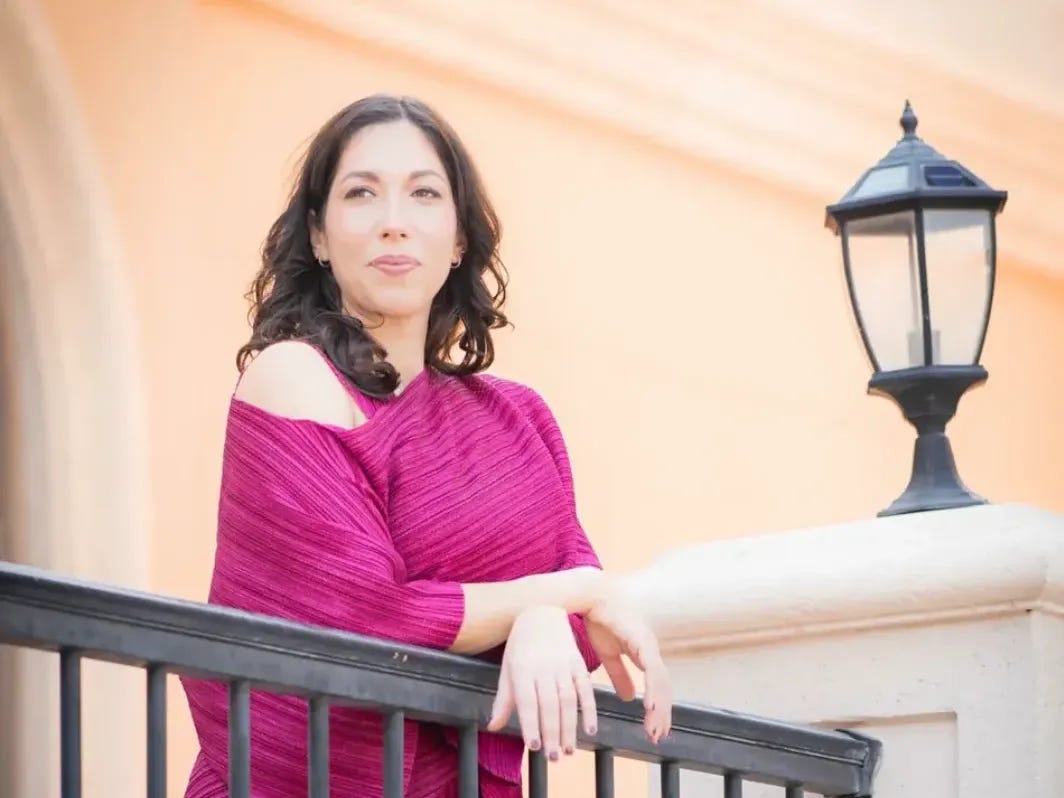
Tell us a bit about yourself and the journey that led you to write about resilience, reinvention, burnout, and life after survival mode.
I was born into a family of beautiful contradictions. My mother is German-Brazilian — highly educated, fiercely competent, and successful in the pharmaceutical industry. My father is Italian, from a very simple background, and was, in the truest sense of the word, never really a father. I was born in Germany, spent time in Brazil and Italy, and grew up moving between countries, languages, and identities — which, looking back, shaped everything.
What I didn’t know as a child was that I was also growing up inside a war zone of my parents’ marriage. My father was deeply manipulative and abusive. When my mother tried to leave him, he went to extreme lengths to stop her — including, we later discovered through private investigators and hidden cameras, hiring someone to stalk and terrorise us. That discovery shook something loose in me that took years to name.
The consequences were real and lasting: I developed an eating disorder, I carried PTSD, and I watched my mother attempt to take her own life twice during my childhood. I held enormous anger toward her, too. Not because she didn’t love me, but because I felt abandoned, even in the middle of her love.
Writing became a way to process what I couldn’t speak about for years. And then speaking became its own kind of medicine. Last year, I won the Best Speech Award and the Special Jury Award at a conference in Paris, where I shared this story on stage for the first time in its full form. That moment told me something: all those years of terror and silence were building toward something bigger.
My husband Jon and I have also walked through financial devastation together. We opened our dream studio in 2020, six weeks before the pandemic shut the world down. We do classical Pilates and our own certified fitness method, Plexus. We survived it all, but at a cost. And now we are building a new chapter in Saudi Arabia.
My life is, in many ways, a story of resilience written in real time. And the most important thing I’ve learned — the thing I come back to again and again — is that we can always choose. We are not trapped by our past. We are not trapped by our decisions. Every moment is a consequence of our actions, and the more aligned we become with who we truly are, the more capacity we have to heal.

Many high achievers are incredibly capable but disconnected from themselves. How do you recognize when you’re operating from genuine strength versus survival mode?
Being in the movement world long before I became a coach taught me something that no textbook ever could: most people live almost entirely in their heads.
When high-achieving clients come to me for private sessions, it often takes a long time for them to decompress. They talk — a lot — and they resist moving, because underneath the performance they are completely depleted. That became a pattern I started to recognise very clearly. The overthinking, the inability to slow down, the subtle refusal to give themselves permission to take even a moment for themselves.
I use breathwork to calm the nervous system, somatic exercises to reestablish body awareness, and then we begin the real work: asking what they actually want.
My very first coaching client was the former Global Head of Influencer Marketing at Hugo Boss. He had severe burnout. All we did, session after session, was set boundaries, reconnect him with his own desires — because he had genuinely lost the ability to locate them — and work through the art of transitioning with dignity.
Genuine strength does not leave you depleted. That is the signal. If what you are doing consistently empties you, you are not operating from strength. You are running on fumes and calling it ambition.

What’s something you’ve had to unlearn in order to build a life that feels more like your own?
People-pleasing. Without question.
I had to unlearn the deep-rooted need to be liked, approved of, and included at any cost. I wrote an article about trusting your own signal, because for so many years my gut was sending me clear messages about certain people and situations, and I kept overriding it. Old wounds have a way of doing that. They crave recognition and belonging, even from the completely wrong people. Especially from them.
I still have moments where my people-pleaser surfaces. I am honest about that. But I have learned to catch her earlier, to be gentle with her, and to remind her that having your own voice is not an act of aggression. It is an act of self-respect.
The biggest fan you will ever have, if you do the work, is yourself.
You write beautifully about not fully belonging to one place and eventually stopping trying to. How has your relationship with belonging evolved over the years?
Thank you. That question touches something very close to the centre of who I am.
German is my mother tongue, but I do not identify with the culture. I love Italy deeply, but I rarely feel fully Italian. My soul feels Brazilian, and yet I barely visit. For years I tried to explain this to people, and the questions that followed — “But where are you really from?” — would spiral into something exhausting. I was always too much of one thing and not enough of another.
Then I stopped fighting it.
There is something fascinating in the gap between language and cultural identity that most people never have to confront. You can speak a language perfectly and feel like a stranger in that country. You can barely speak a language and feel completely at home in its culture. They are not the same thing.
Now I simply say: I am an international woman. Some people smile at that. Some don’t quite know what to do with it. Both are fine.
I don’t correct my children when they mix languages or references or loyalties. I encourage them to explore the literature, the food, the thinking of every country they carry inside them — because that is where the real richness lives. My daughter and son will grow up knowing that identity is not a fixed address. It is a living, layered thing.
I am from everywhere. And that is finally, genuinely enough.

Movement seems to have been a gateway back to yourself long before you had language for what you were experiencing. What did your body know before your mind caught up?
Everything. My body knew everything first.
I was lucky — if luck is even the right word for what felt, looking back, like the universe offering me a lifeline. As a child, I won a drawing competition and was given free horse-riding lessons as the prize. I had drawn the most beautiful horse, apparently. And horses and movement saved me long before I had any language for what I was being saved from.
There is something almost mystical about the relationship between a child and a horse. When you get on a horse, your body begins doing something your mind has not caught up to yet. The rhythmic movement — the constant micro-adjustments, the physical attunement required just to stay in sync with another living being — activates the same neurochemical processes as sustained aerobic exercise. Serotonin rises. Dopamine increases. The nervous system begins to regulate.
Movement also stimulates BDNF — brain-derived neurotrophic factor, a protein central to neuroplasticity, emotional regulation, and recovery from chronic stress. In simple terms: movement helps the brain build new pathways. It supports the hippocampus, which is the part of the brain most damaged by sustained trauma.
Without knowing any of this, I was giving myself the medicine I needed. I craved it because my body understood the prescription before my mind ever could. It was the universe giving me a quiet wink: here is your path.
A lot of ambitious people wear resilience like a badge of honour. What do you think people misunderstand about resilience?
That it is about endurance. It is not.
There is a quote I return to often. Oprah Winfrey said the greatest discovery of all time is that a person can change their future simply by changing their mindset. It captures something I believe deeply: resilience and perspective are inseparable. Our viewpoint shapes how we face what comes toward us.
But the version of resilience that gets celebrated in high-performance culture is often just a rebranding of suffering. Push through. Never let them see you break. Keep going no matter what. We have glamorised the grind and called it strength.
Real resilience is not about forcing a positive attitude or fighting without end. It is about recognising when the path you are on is no longer serving you — and having the courage, and the self-awareness, to take a different one.
When my husband and I opened our studio in 2020, we were all in. Six weeks later, the pandemic arrived. We had two children, no income, and no map. There were nights I cried myself to sleep. But we adapted. I completed my coaching certification after the children were in bed, because I believed — truly believed — in what I was building and why. We kept moving, but we also kept listening. Resilience, for us, was not about pushing to the bitter end. It was about aligning with who we actually were, having patience with the process, and trusting ourselves even when the evidence was thin.
We live in an era of toxic positivity, and resilience has become part of that performance. I think the badge of honour you mention often masks a person who has never been given permission to stop and ask: what do I actually need right now?

Burnout is often framed as a workload problem. In your experience, what are the deeper causes that people tend to overlook?
Shame. That is the deeper cause almost no one wants to name.
There is still enormous shame around burnout, even now — years after the pandemic forced the conversation into the open. Many companies invested heavily in mental health programmes after COVID, then said nothing to their employees about what was available. People did not know where to look, and many would not have looked even if they did, because admitting you are struggling still carries a cost.
What I see underneath burnout, almost universally, is the collision between who someone actually is and the environment they are operating in. We do not all work best in the same conditions. We do not all thrive under the same rhythms, pressures, and structures. But workplaces rarely account for this. Instead, they reward a very specific type of performance and penalise everyone who doesn’t fit it.
I recently coached a woman who had just lost her job in a toxic environment where she was expected — because she had no children — to be available until two in the morning, regularly. Her colleagues accepted this. She could not sustain it. And she was the one who left with shame.
Burnout is not a personal failure. It is often a structural one. And until we stop framing it purely as a workload issue and start asking harder questions about values alignment, psychological safety, and the unspoken rules of who gets to set the boundaries and who doesn’t, we will keep producing the same outcomes and wondering why.
You write that lived experience gives you a kind of honesty no framework can fake. What has life taught you that no certification, training program, or book ever could?
“Not even a Harvard MBA could teach what you just did.” That is what a friend said to me when I told her the story of how I got to Saudi Arabia. I never went to business school. What I have instead is a life that has put me in rooms I had no business being in — and taught me how to stay.
I have certifications. I have done the training. I believe in frameworks — I built one myself. But what no programme prepares you for is the specific kind of intelligence that comes from navigating the unknown without a safety net. The ability to read a room not because you studied it, but because you have survived enough rooms to know what is really being said underneath the words. The instinct to find the one person in a new city who can open the right door, and to know which door that is. The capacity to keep moving when the map runs out — because it has run out before and you are still here.
Getting to Saudi Arabia was not a strategy. It was a series of decisions made from clarity, trust, and an almost unreasonable belief that the next step would appear if I took the current one. It always has.
That is what life has taught me that no book ever could: how to act before you are ready. How to build the confidence to back yourself not from evidence, but from practice. How to turn the hardest chapters of your story into the most credible thing in the room.
That is what I bring. Not a perfect CV. A tested life.
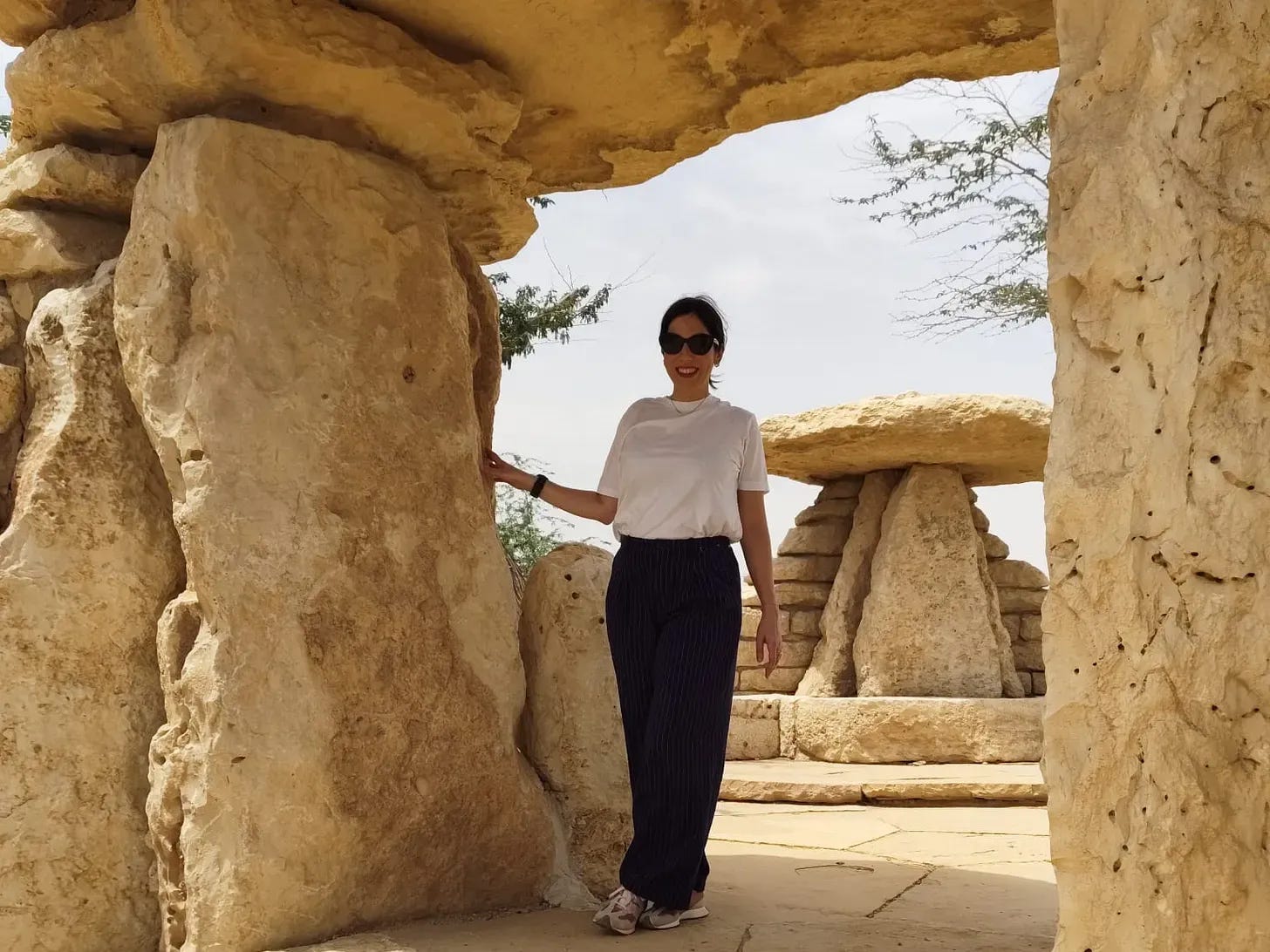
Looking back, was there a specific moment when you realized you no longer wanted to live in survival mode, or was it a gradual awakening?
It was both — and I think that is more common than we like to admit.
There were moments. There was the morning I woke up after a night of crying about the studio, and something in me shifted — not dramatically, not cinematic — but quietly. I thought: I am still here. And that matters. There was the stage in Paris where I stood and spoke about everything I had been carrying, and the room reflected something back to me I had not expected — recognition. People nodding. Eyes filling. And I understood that the story I had spent so long being ashamed of was, in fact, the most useful thing I had.
But the awakening itself was gradual. It happened in layers, over years. Each time I rebuilt something, I rebuilt a version of myself that was slightly less defined by fear. The eating disorder did not disappear overnight. The hypervigilance took a long time to soften. Healing is not a moment. It is a direction.
What I can say is that there came a point where I stopped waiting for survival mode to end before I started living. That was the real shift. I stopped treating my life as a problem to be solved first and a gift to be opened later.
What’s one lesson you’ve learned about creating a life that feels both meaningful and sustainable?
Stop outsourcing your definition of success to other people.
That sounds simple. It is not. Because the version of success that gets held up all around us — in business culture, in social media, in the language of ambition — is often someone else’s vision wearing a universally flattering disguise. And we step into it without realising, and we work very hard inside it, and then one day we look up and wonder why we feel so hollow.
The most sustainable thing you can build is a life genuinely aligned with your real values — not your aspirational ones, not the ones that look good in a mission statement, but the ones that show up in how you spend a Tuesday afternoon. What you say yes to without hesitation. What you cannot bring yourself to keep doing no matter the reward.
My signature line is this: you don’t need a perfect plan. You need clarity, stability, and the courage to back yourself.
Clarity about who you are and what you actually want. Stability — not comfort, but a nervous system regulated enough to make good decisions. And the courage to trust yourself even when the external evidence hasn’t caught up yet.
That is the work. And it never really ends, which, I have come to understand, is the point. The building is the life.

Is there anything else you’d like to add?
Just this: if something in these pages has touched something in you — if you read a line and felt seen, or finally found a word for something you have been carrying silently — please know that that feeling is information. Follow it.
We live in a world that rewards the performance of certainty. But the most honest and courageous thing I have ever done, and the thing that has opened more doors than any credential or strategy, was to stop performing and start telling the truth. And very often I did things when I was not ready. I followed my gut anyway.
I write on Substack about the messy middle — about all the hard things that were really there. The fear, the doubt, the moments I had no idea what I was doing. I write about it because I know, from the inside, what it feels like to go through it alone. And I am here to make sure fewer people have to. To help people feel less alone, and more seen.
The work I do — whether through coaching, through Pilates and the Plexus Method, or through the R.I.S.E. framework — is always in service of the same question: what becomes possible when you finally stop surviving and start building a life that is actually yours?
Want to hear more from Teresa? You can find her work here on Substack.