


The creator economy. The gig economy. Ten years ago, these terms weren’t widely used. Nowadays, they’re ubiquitous, and they’ve reshaped what it feels like to have hobbies, or even interests.
If you’re into home-brewing kombucha, you’re not just experimenting with different flavours. You’re wondering if you should start looking for a commercial kitchen.
Or take oil painting. A few brushstrokes on a canvas won’t cut it. Oh no, you better get yourself registered for an art show.
(It’s me, hi, I’m the problem, it’s me).
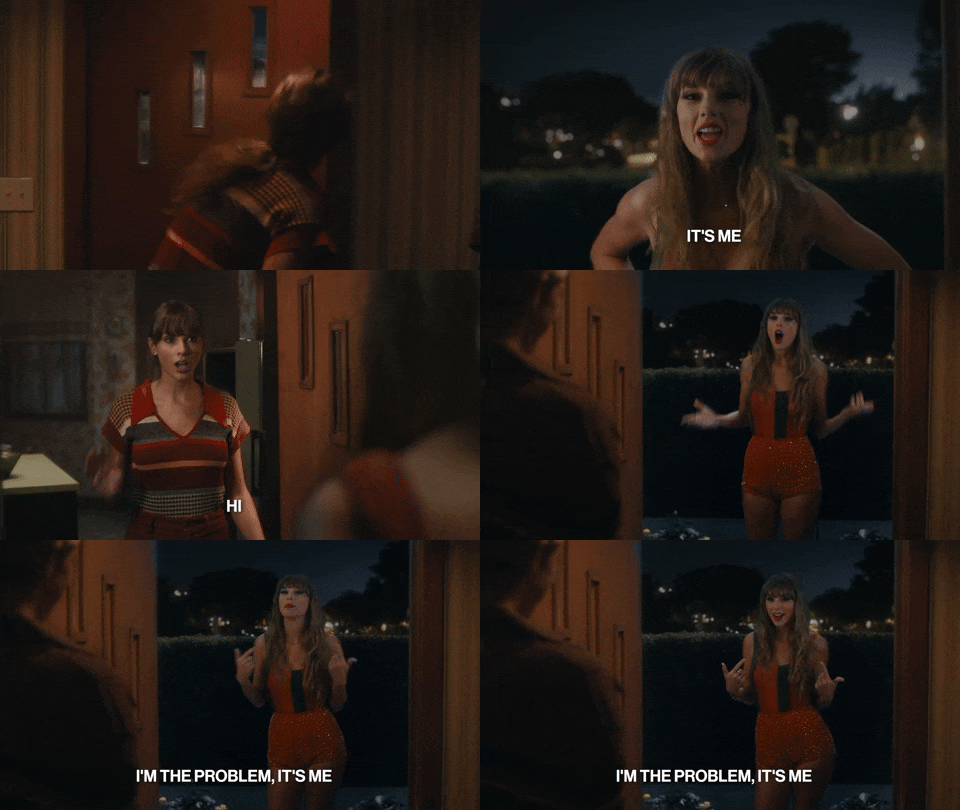
The creator economy shows us constant examples of people turning almost anything — art, business, cooking, fitness, travelling, and even niche obsessions — into income streams. The gig economy reinforces this from another angle, normalizing the idea that skills should always be active, always deployed, always exchangeable for money.
Together, the two form a kind of background logic: if you have an interest in or a talent for something, it should probably be monetized.
The risk you run is losing the joy in that thing.
This is a big tradeoff, but it can also have a big payoff. The work we need to do as individuals is to tap into our own wisdom about what’s right for us.

The blurry line between interest and opportunity
What starts as something personal, something you do because you like it, can begin to carry a different kind of weight once you realize you’re capable of doing it well.
It’s no longer just an activity; it becomes a potential asset. And if you’ve spent time building a business or thinking in terms of growth and opportunity, it’s almost automatic to view everything through that lens.
That’s exactly what happened with my painting practice.
I started taking classes during the pandemic because I was craving a creative outlet and social interaction. I’d only ever attended one paint night event before that, and the result (a sad excuse for a crow) was so lacklustre that it immediately took up residence at the back of a closet.
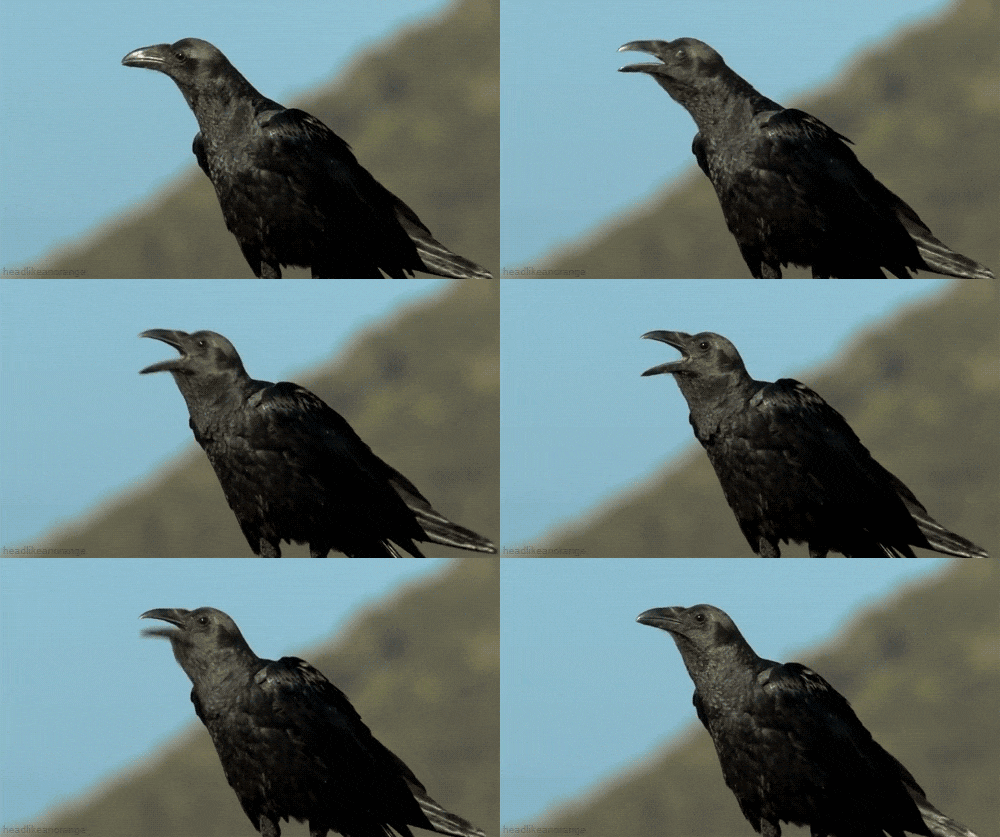
Needless to say, I had zero expectations going into this new class.
And for a while, painting was just a hobby. Because of that, it felt light and calming. But the internal narrative started to change as I became more skilled.
I began thinking about whether I should be doing more with my art. Whether I should be sharing it more intentionally, building a brand around it, turning it into a side business (on top of the business I already owned).
None of those thoughts were outlandish. In fact, they made sense, given my background as a creative entrepreneur and marketer. I also have a bias for action, so there was no way I was going to “wait until I had more experience,” as my well-intentioned husband suggested.
Spoiler: I’m glad I went for it. I met an amazing community of artists and sold a few thousand dollars’ worth of art over the years. But that is not the point of this story.
A shift happens when you move from doing something because you enjoy it to doing it with the expectation that it should lead somewhere. Even if you don’t consciously change your behaviour, the pressure is there in the background, and the process becomes less about exploration and more about outcomes.
This reality is not inherently good or bad, and there is no right or wrong choice to make when it comes to monetizing a hobby or passion.
It’s just something you’ve got to acknowledge, because it will change the way you experience that passion or hobby. You have to decide if you’re okay with that.

Stepping out of the monetization reflex
I now know that not everything in life is meant to be monetized.
This may sound obvious to some of you, but it’s worth unpacking what I actually mean by that.
There’s a difference between something being valuable and something being scalable. Between something being meaningful and something being marketable. Those aren’t the same categories, even if they often get treated like they are.
I see this in the consulting work I do with entrepreneurs. Some ideas simply have greater market potential than others.
This brings me to the other issue. When everything gets filtered through the lens of potential — what it could become, what it could earn, what it could grow into — you start to lose contact with what it actually is right now. The experience gets pulled forward into an imagined future instead of being fully lived in the present.
I want to be clear: there’s nothing wrong with building things. That instinct is useful. It creates structure, momentum, and opportunity. But it isn’t the only way to relate to what you care about.
Some things hold more value when they’re not optimized. When they aren’t shaped around an audience or a market or a plan. When they’re allowed to stay in the same category they started in: something you do simply because you enjoy it.
Travel is one of those things for me. And because of how meaningful it is to me, I’ve chosen not to turn it into content.
Not because there isn’t material there. There is. Travel is endlessly “postable.” Every moment can be packaged into something that performs well online (even the tough moments). That’s exactly why it would be easy to slip into it without noticing what gets lost in the process.
Once something becomes content, only part of you is living the experience while the other part of you is observing it for usefulness. For angles. For how it will land later.
I don’t want that split in something I already value for how fully it holds my attention. So I leave it alone.

Choosing where your attention goes
There’s a point where you realize the decision isn’t really about what to do with your travel stories, or your artwork, or any specific endeavour at all. It’s about what kind of attention you want to live with.
What I’ve noticed is that these experiences and creative works don’t disappear into meaninglessness when they aren’t turned into content. They actually settle more. They stay as memory, not material. They don’t get pulled into performance.
And that has its own kind of richness.
A life built entirely around output starts to flatten experience into usefulness. But there are parts of life that don’t need to justify themselves that way.
Letting them remain unprocessed changes how you relate to everything else. It becomes easier to recognize when something is asking to be built or optimized, versus when it’s asking only to be lived.
Not everything needs to be taken further. Some things are complete at the point of experience. So, this is your reminder to go live your life.
Absolutely loved reading this. As a business coach myself I could relate it so deeply. And this is something we often spoke about in my mastermind too.
Thank you for expressing different layers of this so well. Also this hit home when you said - Once something becomes content, only part of you is living the experience while the other part of you is observing it for usefulness. For angles. For how it will land later.
Look forward to reading more from you :)